

off-the-shelf is an augmented reality interface for collaborative music-making with an AI musician. It visualises notes, controls, and sound parameters so performers can follow contributions and respond while improvising.
Keywords: Interaction design, functional prototyping, performance-based iteration, and user research.
Electronic music can be difficult to follow through sound alone. When several instruments overlap, musicians may struggle to identify who is contributing and which parameters are changing.
I explored how visual feedback could help musicians understand this activity while staying engaged in the creative process.
I adapted my arMIDI system into a working AR prototype connected to the IMPSy generative music system. Three decisions shaped the interface:
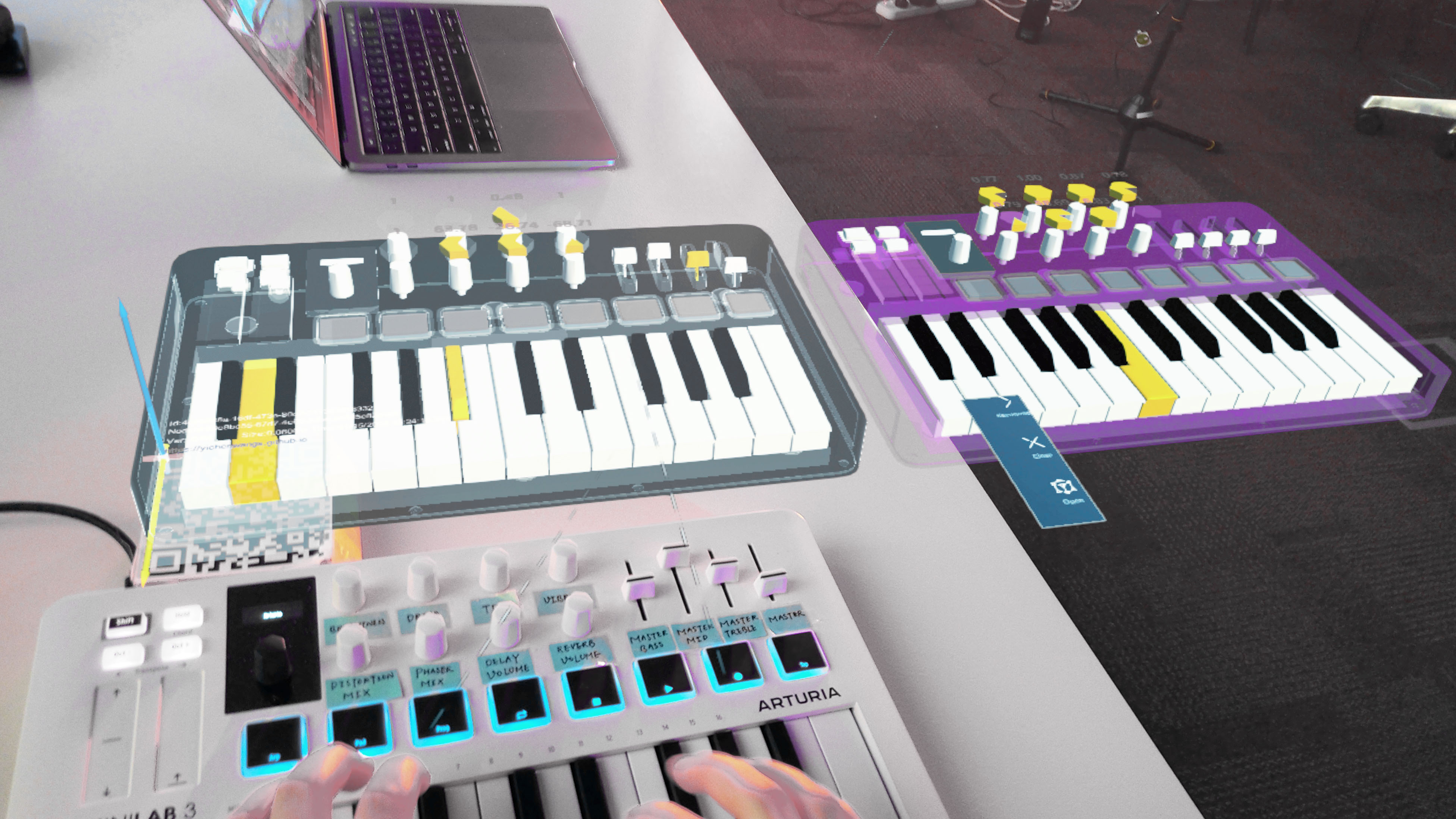
I built the interface in Unity with Microsoft MRTK for HoloLens 2, using Node.js and WebSocket to exchange MIDI data in real time.

I explored the prototype through recorded demos, a live research concert, and trio improvisation. Each setting exposed different constraints.
The first setup visualised notes but offered limited control over sound character. A later configuration expanded the system’s parameter control, creating more varied textures and opportunities for musical call and response. Trio sessions added visualisations for both collaborators and explored shared versus separate instruments, revealing how the setup shaped the AI’s perceived role.
These experiences also exposed a persistent interaction problem: fast-changing activity could be visible without being easy to follow.
I conducted a study with 16 experienced electronic musicians to understand how visual feedback affected their creative experience, both alone with the AI and alongside another human musician.
Visibility needs to support action. Seeing notes and parameter changes helped some musicians identify contributions and respond deliberately. Rapid activity could still be difficult to interpret, and clearer information did not consistently lead to better collaboration.
Design for people creating together. A second human often provided stability and shared understanding. The interface supported this connection as well as awareness of the AI, highlighting the importance of supporting human coordination in creative tools.
The study informed design directions for readable, attributable feedback and flexible collaboration. It provides qualitative insights from music sessions with experienced musicians.